There is a specific kind of nostalgia that only oatmeal cream pies can evoke. We all remember unrolling that plastic crinkle wrap to find two remarkably soft, almost bendable cookies hugging a cloud-like center. But what if you could elevate that childhood staple into a gourmet experience with visible rolled oats, a hint of molasses, and a pillowy marshmallow buttercream that puts the original to shame?
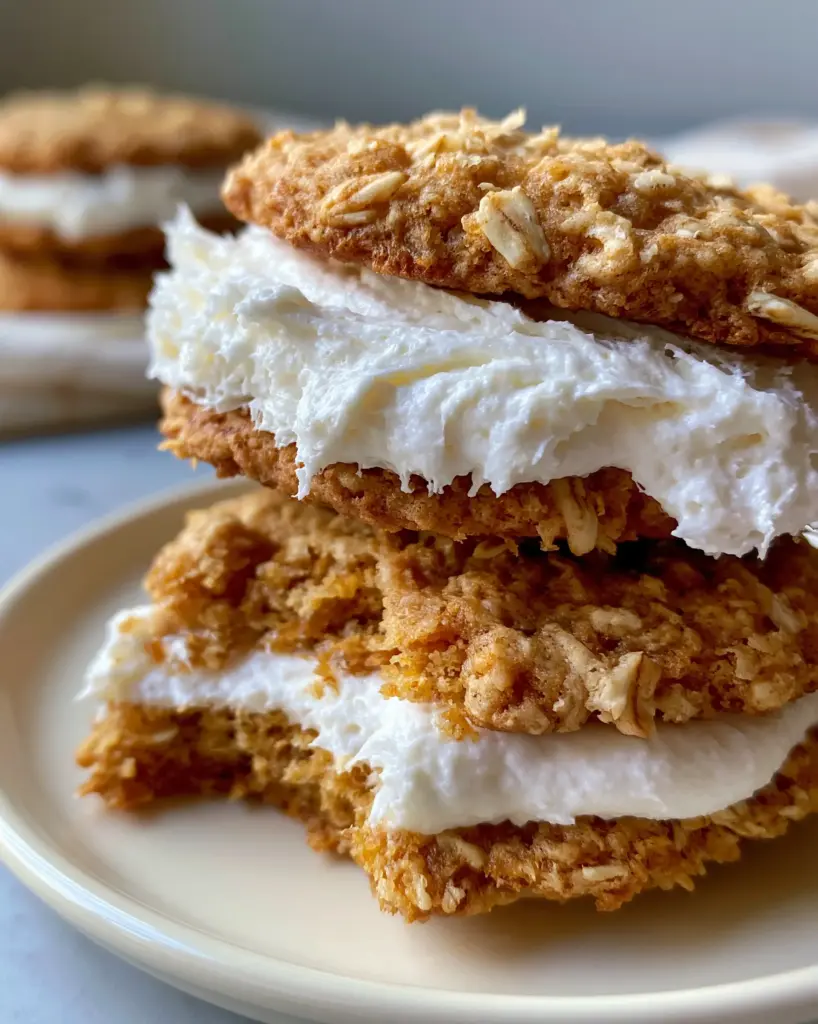
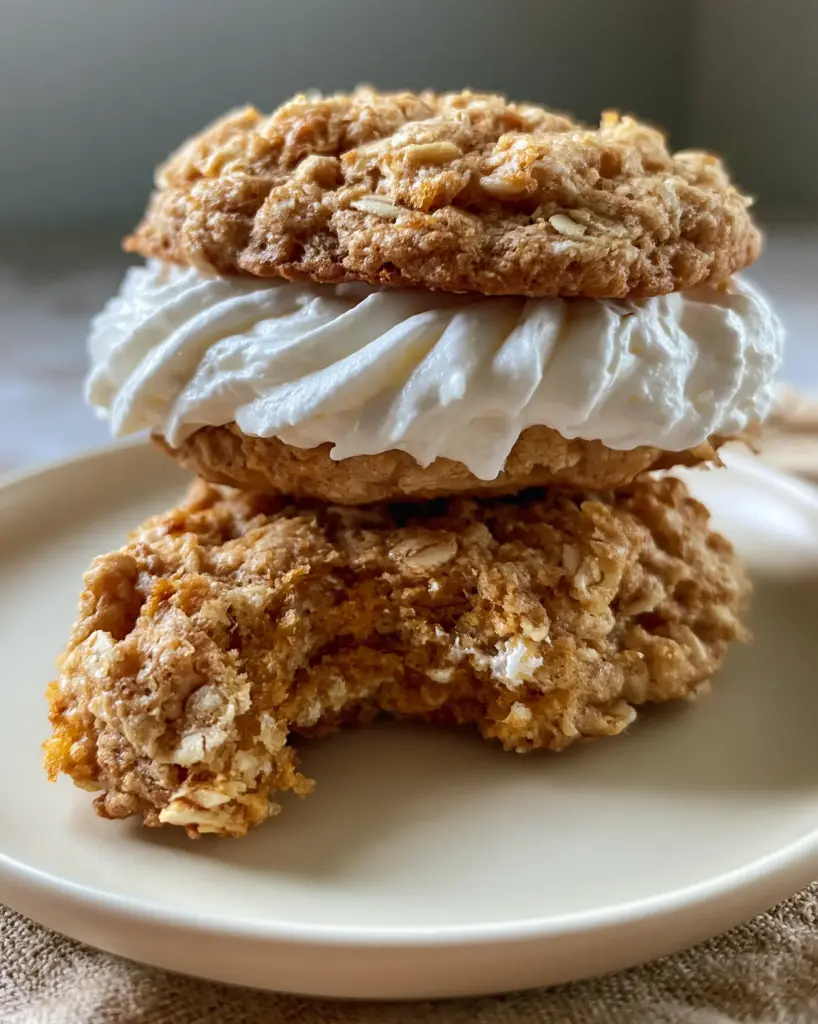
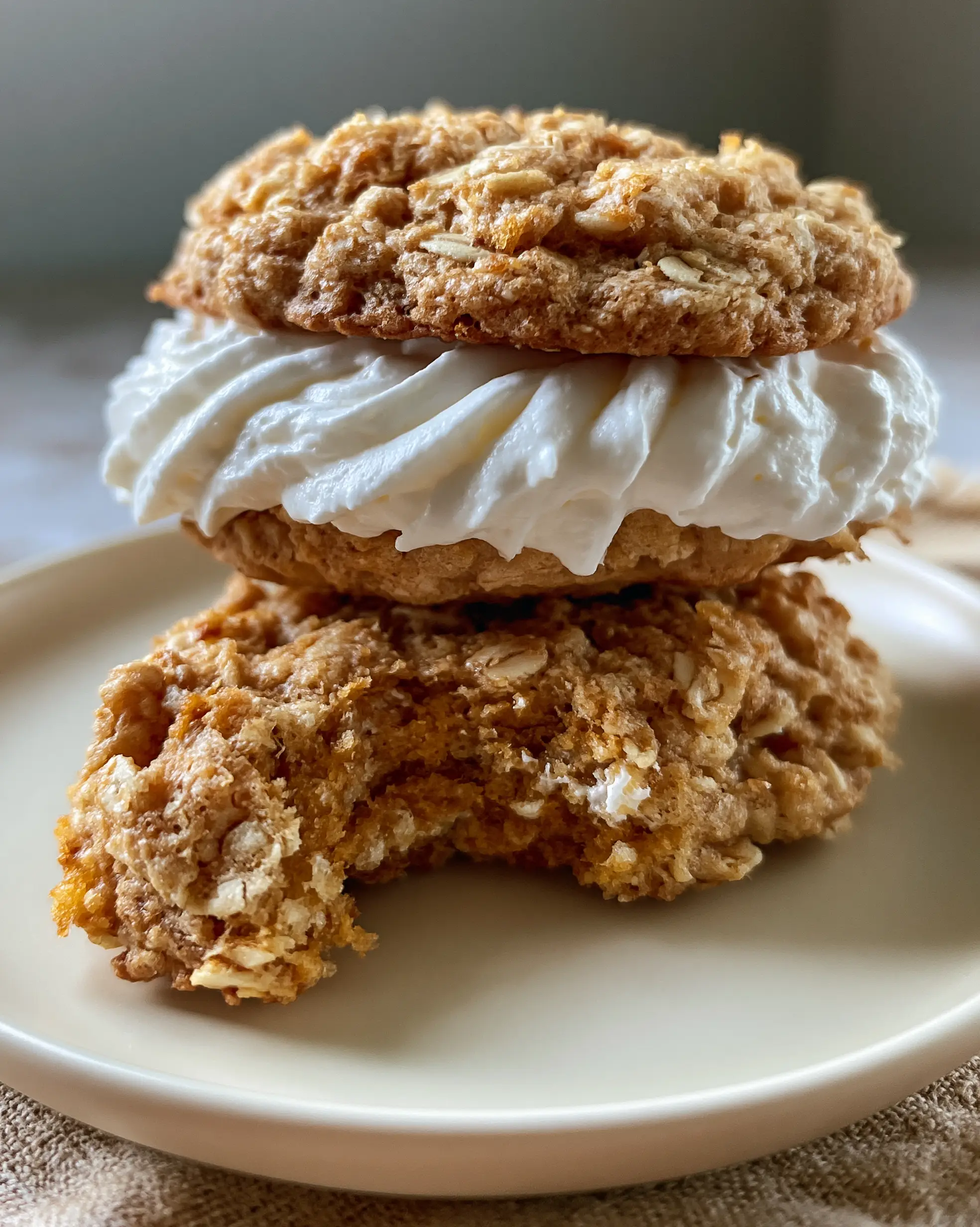
These homemade oatmeal cream pies are a masterclass in texture. We aren’t aiming for a crunchy oat biscuit here; we are engineering a golden-brown, soft-baked cookie that yields perfectly to the tooth. When you take that first bite, as seen in our featured handheld photos, the cookie should bend rather than break, revealing a moist, chewy crumb that perfectly complements the airy filling.
By using side-lit natural daylight to capture the details, we can see the interplay between the rustic texture of the oats and the smooth, professional finish of the marshmallow buttercream. Whether you are serving these on a cream ceramic plate for a dinner party or packing them for a nostalgic lunch, this recipe delivers the “wow” factor both visually and gastronomically.
Why These Soft-Baked Oatmeal Sandwiches Outshine the Rest
- The “Bendable” Factor: Thanks to a specific ratio of brown sugar and molasses, these cookies stay soft for days, mimicking that classic “store-bought” flexibility without the preservatives.
- Visible Rolled Oats: We use old-fashioned rolled oats specifically to ensure a rustic, artisanal look that stands out against the golden-brown dough.
- Marshmallow Buttercream Infusion: Instead of a standard gritty frosting, we use a marshmallow-base filling to achieve that iconic “pillowy” texture that gently presses outward when stacked.
- Aromatic Finishing: A final, delicate dusting of ground cinnamon provides a sensory bridge between the spicy cookie and the sweet cream.
The Science Behind Our Oatmeal Cream Pies Ingredients
Unsalted Butter (1 cup / 227g): We start with softened butter to create a stable emulsion. This provides the fat necessary for a tender crumb and a rich, mouthcoating flavor.
Dark Brown Sugar (1 cup / 200g): The high molasses content in dark brown sugar is the secret to the deep color and the hygroscopic nature of the cookie, which keeps it moist.
Granulated Sugar (1/2 cup / 100g): While brown sugar adds moisture, white sugar helps with the “blistered” golden-brown edges and provides structural integrity.
Large Egg (1 unit): Acts as the primary binder. Ensure it is at room temperature to prevent the butter from curdling during the creaming process.
Unsulfured Molasses (2 tbsp / 30ml): This is the “invisible” ingredient essential for the authentic flavor profile of oatmeal cream pies. It adds a smoky depth and incredible chew.
Pure Vanilla Extract (1 tbsp / 15ml): A heavy hand with vanilla rounds out the spices and elevates the marshmallow notes in the filling.
All-Purpose Flour (1 & 1/2 cups / 188g): Provides the structure. We use just enough to hold the oats together without making the cookie “cakey.”
Ground Cinnamon (1 tsp / 2g): Foundational for that warm, autumnal flavor. We also use extra for the final “cinnamon dust” mentioned in the visual blueprint.
Baking Soda (1 tsp / 5g): This leavening agent reacts with the molasses and brown sugar to create a soft rise and contribute to the browning (Maillard reaction).
Kosher Salt (1/2 tsp / 3g): Salt is crucial to balance the intense sweetness of the marshmallow buttercream filling.
Old Fashioned Rolled Oats (3 cups / 240g): Unlike quick oats, rolled oats maintain their shape, providing the “visible oats” texture required for a professional aesthetic.
Marshmallow Creme (7 oz / 198g): The secret to the “fluffy white marshmallow” filling. It adds stability and a gooey, nostalgic pull.
Powdered Sugar (1 & 1/2 cups / 180g): Sifted to ensure the filling is perfectly smooth and free of any gritty texture.
Ground Cinnamon Dust (for garnish): A light sprinkle over the top cookie of the stack to add visual contrast on the ceramic plate.
Essential Equipment for Professional Results
To achieve the perfectly uniform, stacked look of our oatmeal cream pies, you will need a few key tools. A stand mixer fitted with a paddle attachment is best for aerating the marshmallow buttercream to “pillowy” perfection. A medium cookie scoop (2 tablespoons) ensures every cookie is the same size, which is critical for sandwiching.
You will also need heavy-duty baking sheets and parchment paper or silicone mats. This prevents the bottoms from over-browning before the centers are set. Finally, a fine-mesh sieve is required for that professional ground cinnamon dust finish that tops the assembled pies.
Step-by-Step Guide to the Perfect Oatmeal Sandwich
1. Creaming for Structure and Aeration
In your stand mixer, beat the softened butter, dark brown sugar, and granulated sugar on medium-high speed for at least 3-5 minutes. You are looking for a visual change: the mixture should turn pale and look significantly more voluminous. This process incorporates air, which helps the cookies stay “fluffy” rather than dense.
2. Incorporating the “Secret” Liquids
Add the egg, molasses, and vanilla extract. Beat until fully combined, scraping down the sides of the bowl. The batter should look glossy and smell intensely of toasted sugar. If you’ve ever made banana pudding cookies, you’ll recognize this stage of emulsification as the key to a soft bite.
3. Folding the Dry Ingredients and Rolled Oats
Whisk together the flour, cinnamon, baking soda, and salt. Turn the mixer to low and slowly add the dry ingredients. Once just combined, fold in the rolled oats by hand. You want to ensure the oats are evenly distributed so they remain visible on the surface after baking.
4. The Precision Bake
Scoop rounded tablespoons of dough onto your prepared sheets, spaced 2 inches apart. Bake at 350°F (175°C) for 10-12 minutes. Crucial Sensory Cue: Remove them when the edges are just set and golden-brown, but the centers still look slightly “underdone” and soft. This is how you achieve that bendable, moist texture.
5. Whipping the Pillowy Marshmallow Filling
While the cookies cool completely on a wire rack, prepare the filling. Whip the butter and marshmallow creme together until doubled in volume. Gradually add the powdered sugar. The result should be a thick, pillowy layer of fluffy white buttercream that can hold its shape when pressed between two cookies.
6. Assembly and Cinnamon Dusting
Pair up the cookies by size. Pipe or scoop a generous amount of filling onto the flat side of one cookie. Top with a second cookie, pressing gently until the filling reaches the edges. For the final touch, use a sieve to apply a light ground cinnamon dust over the stack. Serve on a cream ceramic plate to mirror the aesthetic of our handheld photo.
Expert Tips for the Best Oatmeal Cream Pies
- Don’t Overbake: If the cookies look “done” in the oven, they will be crunchy once cooled. Aim for a slightly “wet” look in the very center for that signature chew.
- Cool Completely: Never fill a warm cookie. The marshmallow buttercream is delicate and will melt into a greasy mess if the cookies haven’t reached room temperature.
- The “Overnight” Secret: These pies actually get better after 24 hours. The moisture from the filling seeps into the cookies, making them even more tender and cohesive.
- Pulse the Oats (Optional): If you want a slightly more refined crumb while keeping the oats visible, pulse 1 cup of the oats in a blender for 2 seconds before adding them to the dough.
Creative Pairings and Serving Suggestions
While these oatmeal cream pies are a standalone triumph, they fit beautifully into a larger dessert spread. If you are hosting a themed event, consider these complementary treats:
For a fruit-forward contrast, serve these alongside a strawberry rhubarb pie or a batch of peach cobbler cinnamon rolls. The warm cinnamon notes in the cookies pair beautifully with stone fruits and berries.
If you’re planning for a holiday, these are a hit at any 4th of July party. Their handheld nature makes them easier to manage than a sliced cake. For a truly decadent experience, serve them with a cold glass of milk or even a homemade fruit Irish cream soda for a sophisticated twist on milk and cookies.
Frequently Asked Questions
You can, but quick oats will absorb more moisture and make the cookie drier. Rolled oats are preferred for the ‘visible oat’ texture and superior chew.
Molasses is the key to the authentic flavor and dark golden color. It also helps with the hygroscopic properties that keep the cookies moist and flexible.
Store them in an airtight container at room temperature for up to 3 days. For longer storage, you can refrigerate them, but let them reach room temperature before eating for the best texture.
Crunchy cookies are usually a result of overbaking. To keep them ‘bendable’ and soft, remove them from the oven while the centers still look slightly wet and underdone.
Runny filling usually happens if the butter was too warm or if you didn’t add enough powdered sugar. Ensure your butter is cool-room temperature and whip it thoroughly with the marshmallow creme.
The Ultimate Soft-Baked Oatmeal Cream Pie Recipe
Oatmeal Cream Pies: The Ultimate Homemade Soft-Baked Cookie Recipe
Ingredients
Equipment
Method
- Cream the 1 cup butter, dark brown sugar, and granulated sugar in a stand mixer on medium-high for 3-5 minutes until pale and fluffy.
- Beat in the egg, molasses, and vanilla extract until the mixture is glossy and well combined.
- In a separate bowl, whisk the flour, cinnamon, baking soda, and salt. Gradually add to the wet ingredients on low speed.
- Fold in the 3 cups of rolled oats by hand until evenly distributed, ensuring they remain visible for texture.
- Scoop 2 tbsp portions onto parchment-lined sheets. Bake at 350°F (175°C) for 10-12 minutes until edges are golden-brown but centers are soft.
- Whip 1/2 cup butter and marshmallow creme until fluffy. Add powdered sugar and vanilla; beat until pillowy.
- Pipe filling onto the flat side of one cooled cookie and top with another, pressing gently until the filling reaches the edge.
- Use a sieve to sprinkle a fine layer of ground cinnamon dust over the assembled pies before serving on a ceramic plate.
Notes
Store in an airtight container at room temperature for up to 3 days for the best texture.
Closing & Call to Action
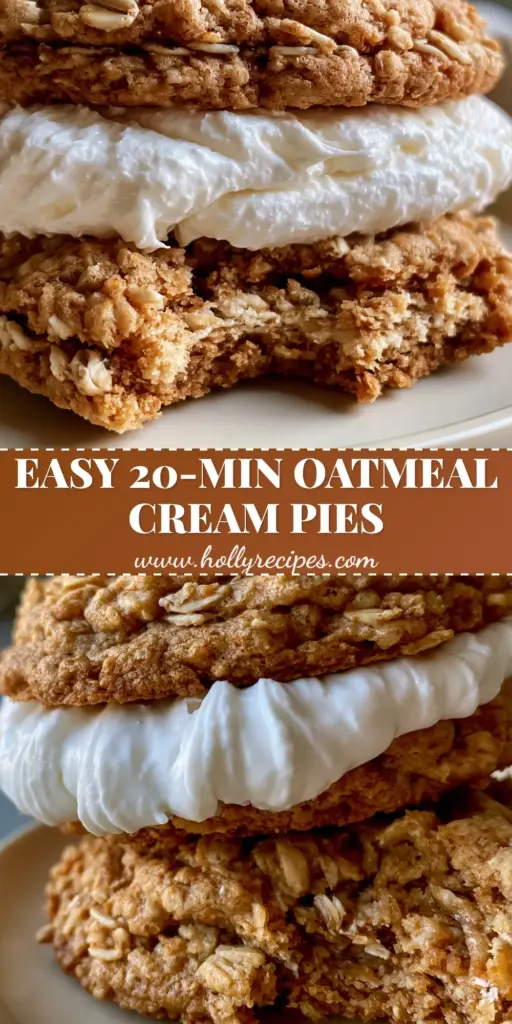
Mastering the oatmeal cream pies at home is a rewarding journey into the heart of nostalgic baking. By focusing on the “bendable” texture of the cookies and the “pillowy” loft of the marshmallow buttercream, you create a dessert that is as beautiful as it is delicious. The visible rolled oats and the delicate dusting of cinnamon make these a standout on any ceramic plate.
If you enjoyed this deep dive into culinary forensics, please leave a comment below with your results! Don’t forget to share your creations and follow my latest recipes on Pinterest. Happy baking!